
By Dr. Can Öztaş
If Cyprus were a film, it would probably be The Truman Show.
Not because anything dramatic is happening, quite the opposite. The genius of The Truman Show is that nothing seems to be happening at all. In Cyprus, European regulations apply, state and diplomatic visits proceed, naval patrols promise stability.
But like Truman’s town, the entire setting rests on an illusion that everyone has quietly agreed not to question.
The implicit assumption is simple: The “Republic of Cyprus” is a normal European state facing external instability, and the correct response is to send ships.
In geopolitical terms, there is nothing normal about the island of Cyprus.
Cyprus is a divided island with an unresolved constitutional order, a United Nations peacekeeping mission that has been running since 1964, foreign military bases operating under treaty arrangements, and a guarantor system designed precisely to prevent the island from becoming a strategic platform for exactly the kind of regional rivalries now encircling it.
The Republic of Cyprus was established in 1960 through a constitutional settlement involving Turkey, Greece and the United Kingdom as a carefully balanced architecture. The Treaty of Guarantee (1960) required the new state to preserve its independence, territorial integrity and constitutional order. It also explicitly prohibited Cyprus from joining “in whole or in part” any political or economic union with another state.
The logic was straightforward. Cyprus would remain neutral and balanced within a fragile regional environment.
It did not last long.
In December 1963, the constitutional partnership between Greek and Turkish Cypriots collapsed. Turkish Cypriot representatives were forced out of state institutions, and violence spread across mixed areas of the island. Turkish Cypriot neighborhoods came under attack, triggering displacement and the gradual emergence of scattered Turkish Cypriot enclaves.
GREEN LINE IN CYPRUS
As clashes spread across Nicosia, the British commander Major-General Peter Young drew a ceasefire line through the capital using a green pencil on a map, the Green Line. It has never been erased.
The following year, UN Security Council Resolution 186 (1964) established the United Nations Peacekeeping Force in Cyprus. By then the constitutional partnership that had founded the republic was already collapsing, and the island had entered a prolonged period of separation and insecurity long before 1974 became the date most often cited in international commentary.
This sequence matters. The crisis of 1974, the Greek-backed coup aimed at union with Greece followed by Turkish military intervention, did not create the island’s division. It froze a conflict that had already shattered the constitutional structure of the state a decade earlier.
Yet despite this unresolved reality, the European Union admitted the Republic of Cyprus as a member in 2004.
In practical terms, the EU incorporated a state whose government does not exercise authority over roughly one third of the island’s territory it claims to represent. Then, in an act of convenient legal geography, the application of EU law was suspended in the northern part of that same territory through Protocol No. 10 to the Act of Accession.
Lawyers call this a legal accommodation. It is the diplomatic equivalent of drawing another green line through a map and writing “this part doesn’t count” in the margin.
The arrangement has held for two decades largely because the island remained quiet enough that diplomats, journalists and policymakers began treating the Cypriot question as a closed file, settled enough to ignore, but never truly resolved.
This is what geopolitical sleepwalking looks like in practice.
ISLAND UNDER TENSION
What is happening around Cyprus today is not simply a response to Iranian strikes or regional volatility. The island is already inside the tension, not adjacent to it. In December 2025, Cyprus, Greece, and Israel held their tenth trilateral summit in Jerusalem, reaffirming cooperation on security, defence and maritime matters in the Eastern Mediterranean. In the weeks that followed, defence officials from the three countries agreed on a 2026 military action plan that includes expanded joint naval and air exercises and the transfer of defence know-how between Israel, Greece and Cyprus.
In other words, Cyprus is not merely observing the region’s tensions. It is increasingly embedded within the security architecture that surrounds them.
The architects of the 1960 settlement understood this danger. The Treaty of Guarantee prohibited Cyprus from becoming an extension of any external power. What we are watching today, including the recent visits of EU leaders promising additional military deployments to the island, dressed in the language of regional security and stabilisation, is a gradual erosion of that original premise.
In Cyprus’s Truman Show, the walls of the geopolitical set are the military lines of a frozen conflict, drawn in blood and held in place by force.
One regional war should not unfreeze another.
*Can Öztaş, LL.M., Ph.D, is a retired Turkish diplomat and jurist who writes on international law, Turkish foreign policy, and the politics of narratives. He teaches Turkish foreign policy and international law at Bilkent University in Ankara and contributes regularly to Turkey in Depth and the Critical Legal Thinking platform. This article was originally published in Turkey in Depth.
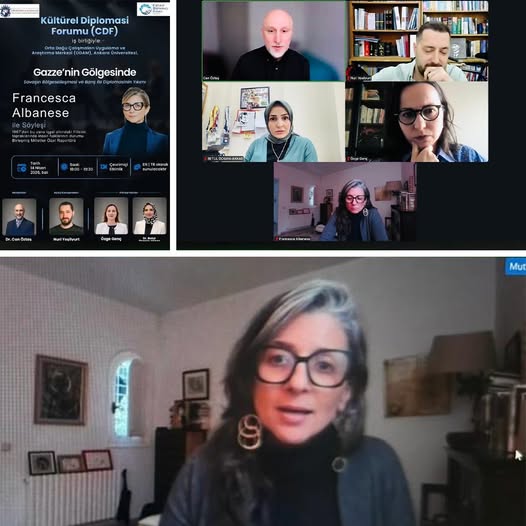



The Cultural Diplomacy Forum (CDF), in partnership with ODAM at Ankara University, hosted a high-level dialogu...
The implicit assumption is simple: The “Republic of Cyprus” is a normal European state facing external instabi...
The outrage from certain commentators, demanding that the 23-year-old Houston Rockets center be punished for “...
The opening line of the anthem of Mülkiye, the prestigious Political Science Faculty of Ankara University, dec...
Diplomacy loves spectacle because spectacle is easy to schedule, easy to photograph, and very easy to mistake...
As of early February 2026, there is still no evidence of a fully operational reopening of the land border betw...
Cultural diplomacy is no longer the “soft” edge of foreign policy. In a moment defined by shattered norms, wea...
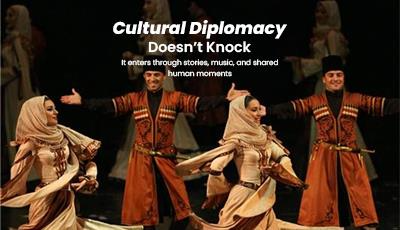
It doesn’t arrive with a convoy, a protocol officer, or a carefully negotiated communiqué. It shows up as a so...
MENA Centra is at the forefront of regional change. We combine strategic vision, policy acumen, and on-the-ground experience in a way that fills gaps between vision and delivery. Collaborations and local intelligence are delivered by us to drive scalable growth and sustained impact.
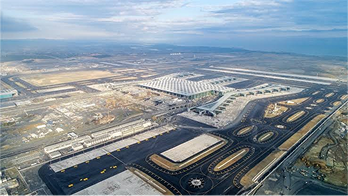
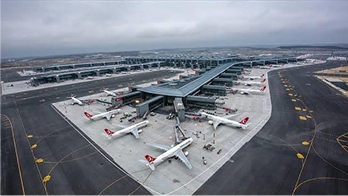

The MENA region is currently experiencing a period of transformation, which is largely powered by advancements in techno...
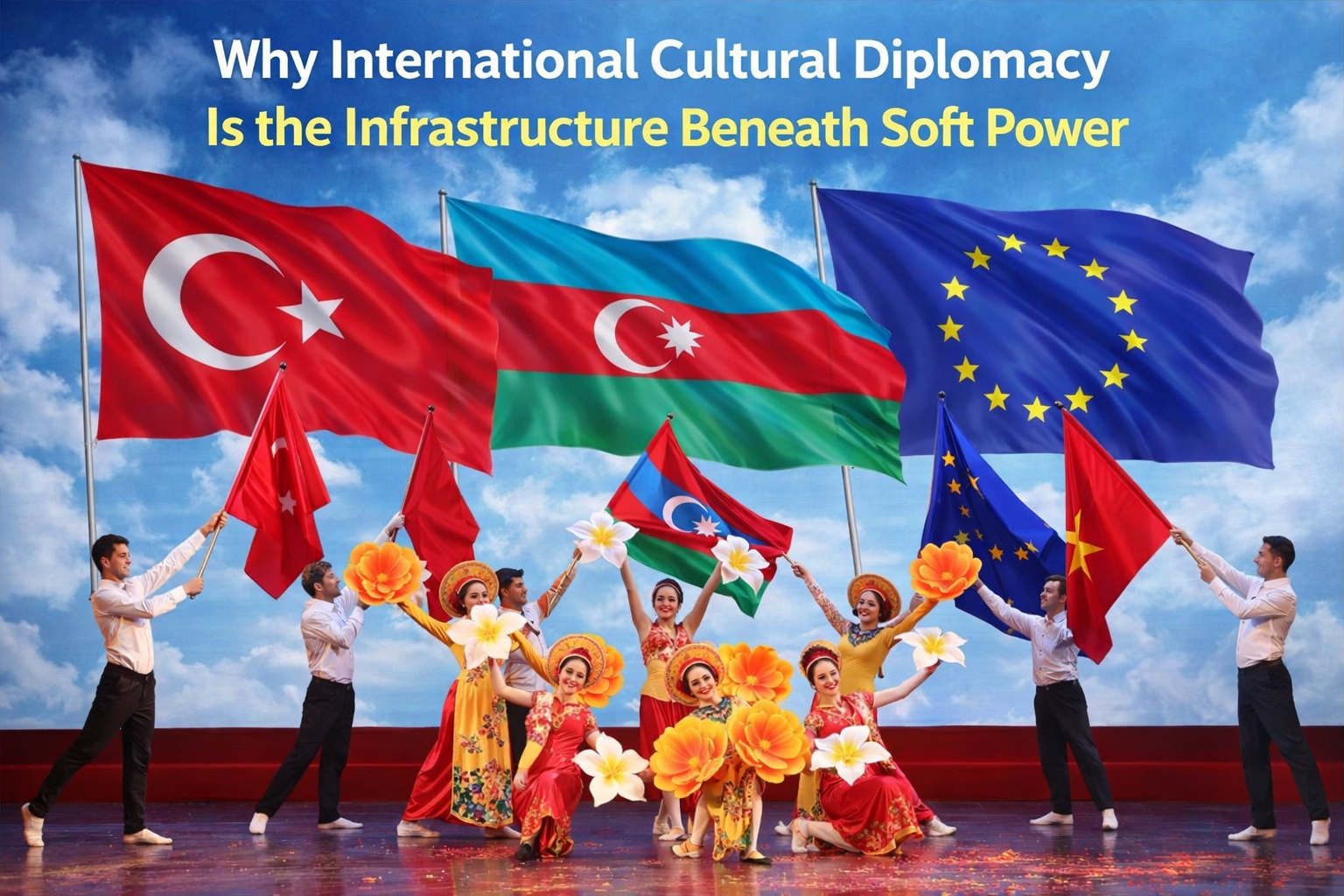
Nobody schedules a meeting to fall in love with a country. It happens through a television series watched at midnight, a...
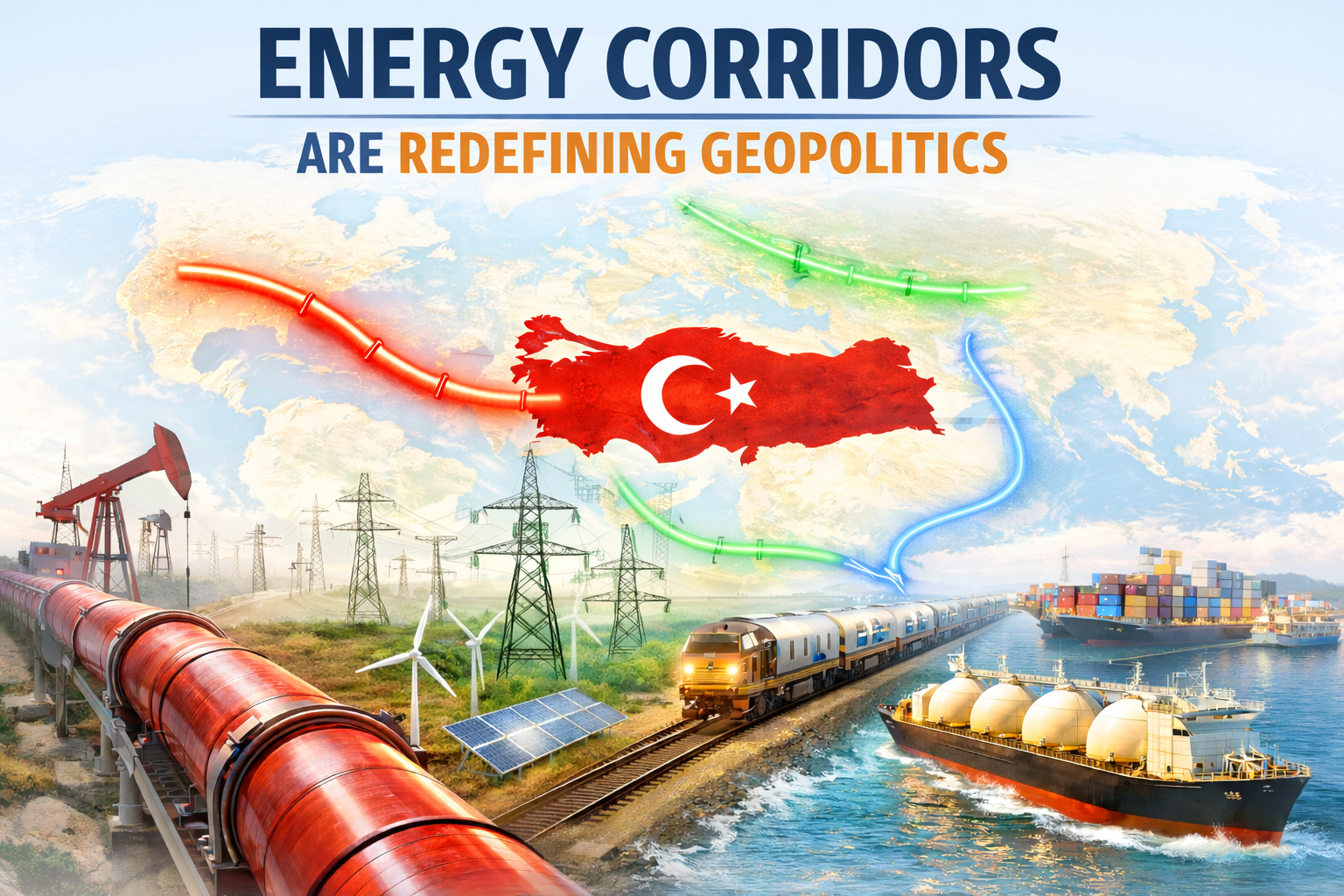
MENA Centra Trade Corridors Watch – East–West routes in flux
MENA Centra Trade Corridors Watch – East–West routes in flux
Turkey’s hub gambit under stress: nuclear bets, gas hedging and contested corridors
MENA Centra Trade Corridors Watch – East–West routes in flux
Türkiye’s outward push: energy diplomacy from the Eastern Med to Pakistan
Turkey’s next move: from transit state to energy–industrial hub