
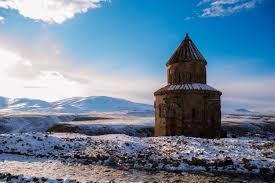
As of early February 2026, there is still no evidence of a fully operational reopening of the land border between Turkey and Armenia, despite widespread speculation at the beginning of the year. What currently circulates are expectations of a phased opening potentially limited to third-country nationals, with repeated references to March 2026. These indications, however, remain largely based on political signaling and media reporting rather than a comprehensive, officially implemented border regime. It bears recalling that the border has been officially closed since April 3, 1993.
Why Reopening the Border Is Primarily a Political Decision:
This border is not merely a crossing point; it is a geopolitical instrument. Its closure in 1993 was directly linked to Ankara’s position during the first Nagorno-Karabakh war, making any reopening today a signal of strategic recalibration rather than a technical adjustment.
For this reason, Turkey continues to frame normalization with Armenia within the broader context of stability in the South Caucasus. Reopening the border without political safeguards would inevitably be read by regional actors as a shift in alignment, particularly by Azerbaijan, rather than as a neutral economic or humanitarian gesture.
Economic Incentives Exist, Even Under Closure
Paradoxically, economic exchange already exists, albeit indirectly. In 2024, Armenia imported approximately USD 334–336 million worth of goods from Turkey, while Armenian exports to Turkey remained negligible (around USD 0.4 million). This imbalance highlights a reality: trade is occurring despite closed borders, routed through third countries at higher cost.
A controlled reopening would therefore not create trade from scratch, but rather formalize and rationalize existing flows, lowering transport costs and generating visible economic interests that would raise the political cost of re-closure.
Kars: From Peripheral City to Strategic Gateway
Tourism as a Political Asset
Border cities such as Kars illustrate how tourism can translate into geopolitical relevance. Kars has already developed a strong domestic tourism profile, particularly through the Touristic Eastern Express train:
These figures matter politically; they show that Kars possesses an existing tourism base. A border opening would not start from zero but would layer cross-border or third-country visitors onto an already active local economy.
Ani: Heritage at the Edge of Politics
The ancient city of Ani, located directly along the sensitive border zone, has already become a model of how shared heritage can function as a bridge rather than a fault line. In 2021 alone, Ani welcomed approximately 66,200 visitors, despite ongoing border restrictions. A reopening would significantly deepen this model, enabling memory-based tourism and cultural exchanges that do not require immediate political consensus to begin.
Investment Signals Are Already There
An EU-funded urban heritage project in Kars, with a budget of approximately €5.5 million, has focused on restoring historical identity and strengthening tourism infrastructure. Official project targets speak of raising annual visitor numbers from 200,000 to as many as one million — an ambitious goal, but one that reflects the scale of expectations attached to the city’s potential role.
The Core Political Constraint: The Armenia–Azerbaijan Conflict
Despite these incentives, the reopening of the Turkey–Armenia border remains inseparable from the unresolved Armenia–Azerbaijan conflict.
Three political risks stand out:
First, reversibility.
Any escalation between Yerevan and Baku could result in a rapid re-closure. From an economic perspective, this unpredictability — more than closure itself — is what deters long-term investment and tourism planning.
Second, Azerbaijani sensitivities.
Baku closely monitors whether normalization with Armenia appears unconditional. Even limited humanitarian openings have triggered political reactions, underscoring how symbolically charged the border issue remains.
Third, domestic politicization.
In Turkey, Armenia, and Azerbaijan alike, memory, identity, and nationalism remain powerful mobilizing forces. This makes governments cautious, often favoring symbolic or tightly circumscribed steps over structurally transformative ones.
Why Culture and Tourism May Be the Most Viable Entry Point
Against this backdrop, culture and tourism are not decorative add-ons; they function as instruments of soft power with hard effects. Gradual increases in visitor flows, local spending, employment, and small-scale entrepreneurship create constituencies with a vested interest in stability. Over time, these interests can transform a political decision into a lived social reality.
This logic aligns with recent confidence-building steps. Turkey and Armenia have agreed to simplify visa procedures, allowing holders of diplomatic, special, and service passports to obtain free electronic visas as of January 1, 2026 — a modest but symbolically important measure that lowers barriers without forcing premature political conclusions.
At the leadership level, Armenian Prime Minister Nikol Pashinyan’s visit to Turkey and his meeting with President Recep Tayyip Erdoğan in June 2025 marked a rare and highly symbolic moment in bilateral relations. Yet the visit also underscored the limits of symbolism: border normalization continues to move in parallel with, not independently from, broader South Caucasus peace arrangements.
Conclusion: Opening as a Long-Term Political Investment
The reopening of the Turkey–Armenia border is not a question of timing alone, but of design. A sudden, unprotected opening risks becoming reversible and politically destabilizing. A gradual, managed opening beginning with tourism, culture, and limited mobility offers a more sustainable path.
In a region shaped by unresolved conflicts, peace is unlikely to arrive through a single comprehensive agreement. It is more likely to emerge through accumulated interests, routine interactions, and economic interdependence that make closure the exception rather than the rule. In this sense, border opening is not merely a logistical act, but a calculated political investment in a more stable regional order.
As of early February 2026, there is still no evidence of a fully operational reopening of the land border betw...
MENA Centra is at the forefront of regional change. We combine strategic vision, policy acumen, and on-the-ground experience in a way that fills gaps between vision and delivery. Collaborations and local intelligence are delivered by us to drive scalable growth and sustained impact.
Open any investment briefing on Türkiye and the first slide is almost always about risk. Currency swings, inflation char...

Most international business partnerships don't make it past the three-year mark. Cultural misalignment, mismatched expec...

Global businesses need more than just access to different markets. They want trusted relationships. They need local unde...

Every year, governments and institutions invest heavily in international cultural diplomacy, funding exchange programs,...
Global trade is growing. And the traditional systems designed to manage it are now facing trouble. Every year more goods...

The Middle East and North Africa (MENA) region has long been synonymous with oil and gas production. However, as the wor...
There is a quiet war happening across the Middle East and North Africa, and it has nothing to do with tanks or borders....
In the world we live in today, what the government does in one place can affect things on the other end of the world. If...