07 April 2026 Admin
Across the world, the tools of formal diplomacy are under pressure. Summits stall. Bilateral relations freeze. Multilateral frameworks lose authority. And yet, in the middle of all of this, certain channels keep working, students still cross borders, artists still collaborate, and cultural institutions still build contact where governments have withdrawn it.
This is not a coincidence. It is the logic of international cultural diplomacy at work.
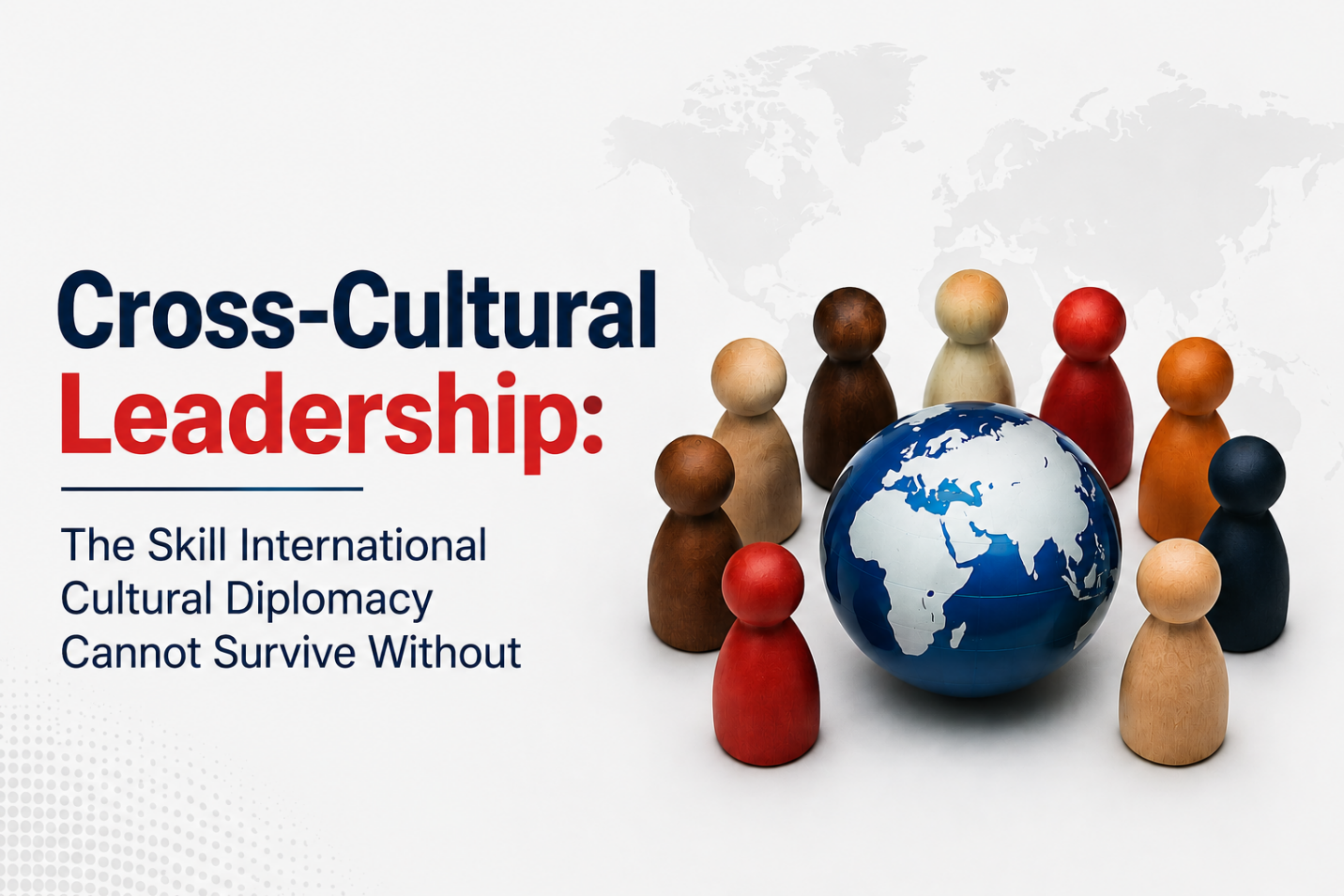
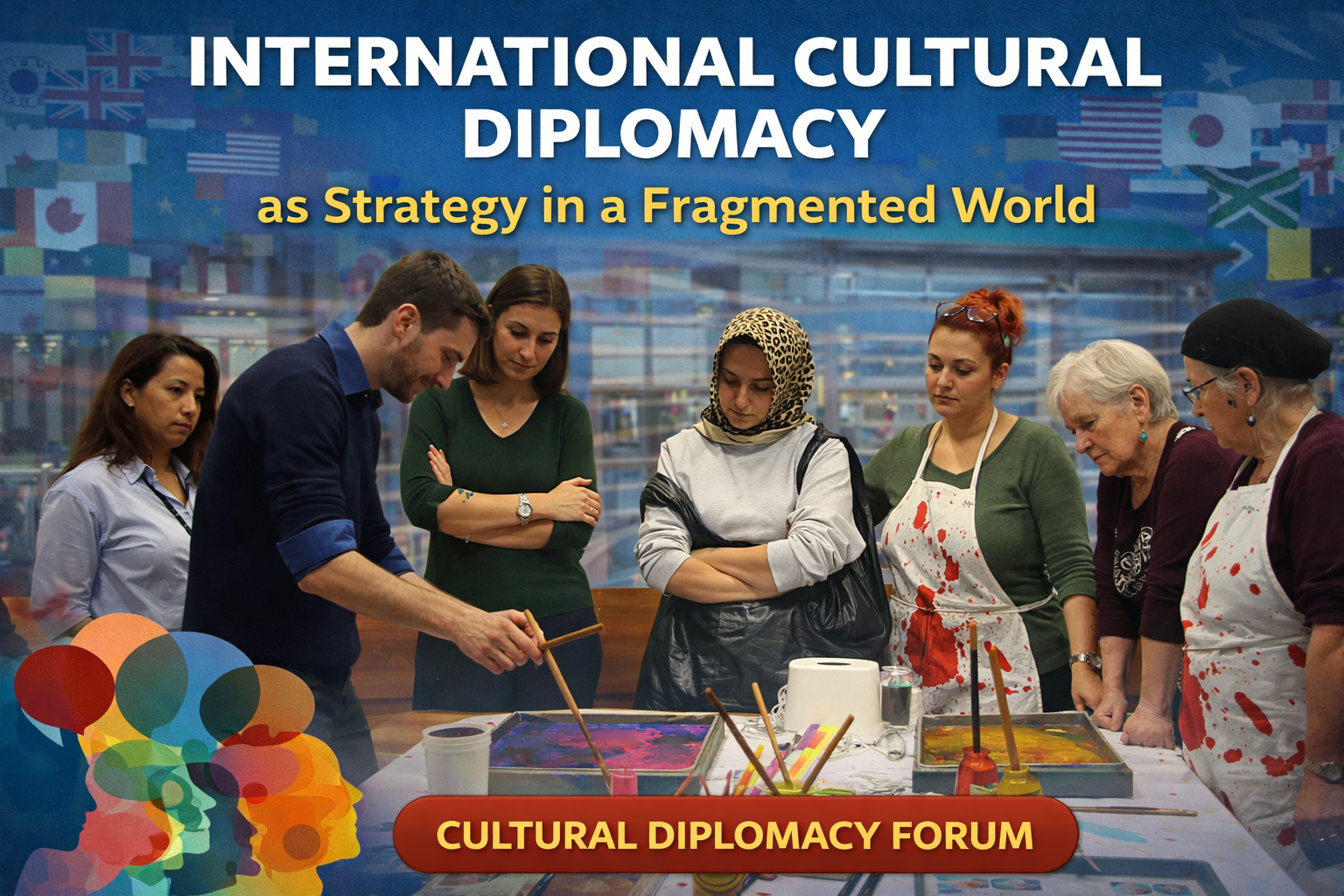
This is the use of culture, language, arts, heritage, and education to build relationships across borders. Not by pushing policies, but by shaping perception. Not by winning arguments, but by creating the conditions where dialogue remains possible.
What distinguishes it from other foreign policy tools is its reach. Traditional diplomacy is elite-to-elite, constrained by summit calendars and political optics. Cultural diplomacy is people-to-people. It operates through students, artists, universities, museums, cities, and civil society. When relations freeze at the top, cultural channels continue to move beneath, preserving contact, keeping narratives from collapsing into total hostility, and sometimes remaining the only line still open.
This is not a secondary function. In today's environment, it is critical.
The deeper logic of international cultural diplomacy is about social permission, the conditions under which cooperation becomes possible.
Treaties do not hold if societies do not. Formal agreements can be signed and ratified, but trust cannot be mandated. Curiosity cannot be commanded. Empathy cannot be legislated. These things are built through sustained contact, shared reference points, and human familiarity over time. Culture is one of the most direct routes into that space and, in many contexts, the only route left.
This is why serious actors invest in cultural institutions not as a communications exercise, but as a long-term relationship policy. Reputation in global politics is strategic, not superficial. Being perceived as credible, open, and trustworthy changes how other states invest, partner, and engage. The British Council, Germany's Goethe-Institut, the Japan Foundation, and South Korea's cultural infrastructure are not soft gestures. They are long-term assets built with strategic intent.
This is also increasingly an economic instrument, feeding tourism, creative industries, education exchange, and trade partnerships. In many countries, it sits alongside economic diplomacy and development policy in the same strategic framework, because culture is one of the fastest ways to generate visibility, relationships, and long-term influence simultaneously.
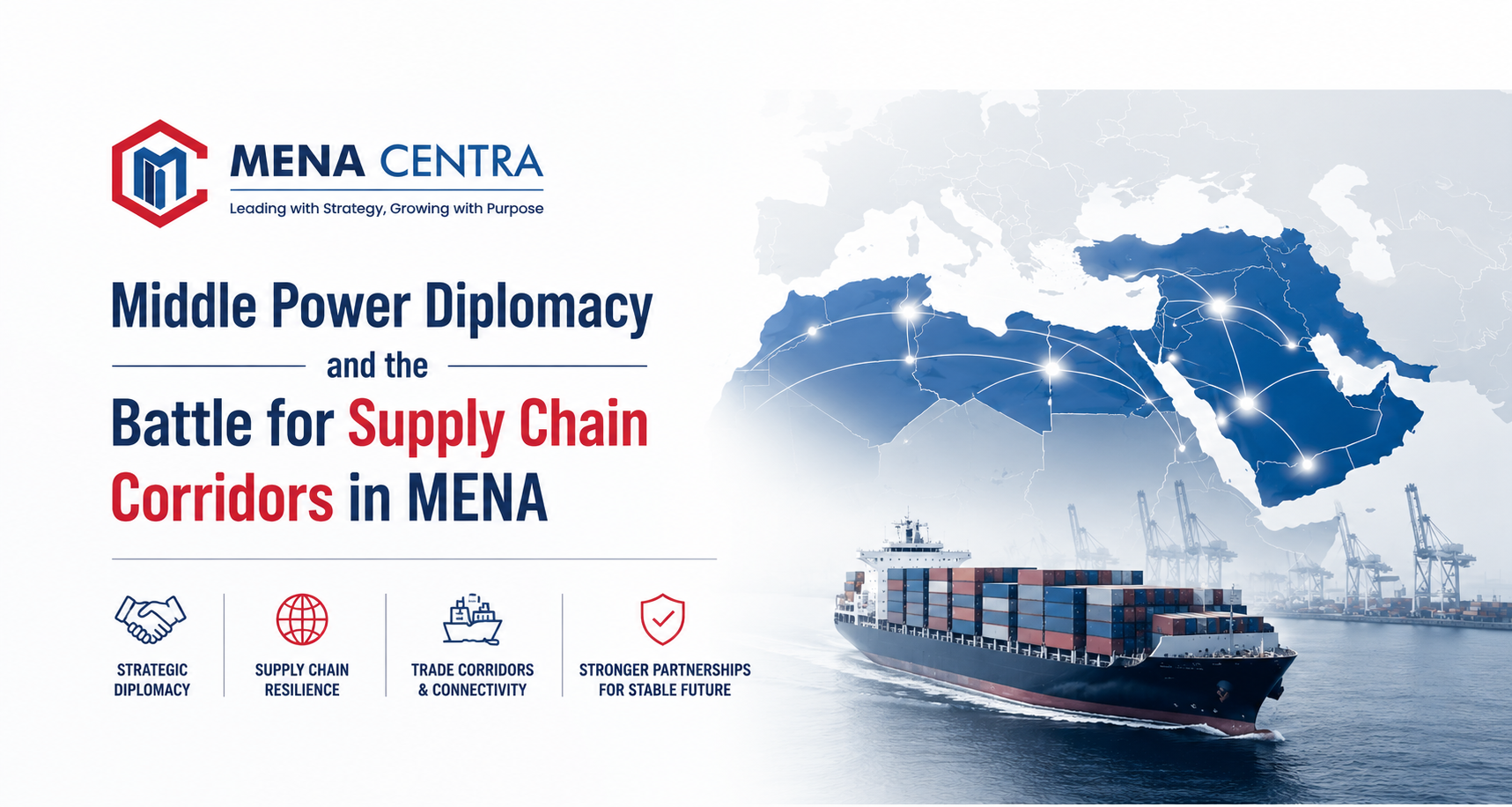
For many states in the MENA region, Turkey, and the broader neighborhood, the relevant framework is Middle Power Diplomacy, an approach that competes not on military weight or economic dominance, but on credibility, constructive engagement, and the ability to build bridges others cannot.
It does not position a country as a hegemon. It positions a country as a trusted interlocutor, a state that other actors want at the table because it adds value, reduces friction, and sustains relationships across divides. Cultural diplomacy is one of the primary instruments through which this kind of influence is built. It operates below the threshold of geopolitical threat and above the noise of transactional politics.
Cyprus presents a more complex case. On a divided island, cultural diplomacy becomes heritage negotiation and memory documentation, the politics of whose story is preserved and whose past is protected.
The MENA region does not lack culture. It has civilizational depth, layered heritage, rich artistic traditions, and some of the world's most compelling creative ecosystems. The question has never been whether the region has cultural assets. The question is whether it has built the institutional infrastructure to turn those assets into sustained relationships and durable influence.
In parts of the Gulf, the answer has been deliberate and large-scale. Museums, heritage destinations, biennials, and cultural districts have been built as a national strategy, tied directly to tourism, investment, and economic diversification. In cities like Cairo, Beirut, Tunis, and Amman, the cultural ecosystems are organic and deep. When these countries engage through international cultural diplomacy, it carries the weight of lived culture rather than a manufactured image.
The gap between cultural depth and institutional design is not a knowledge problem. Most governments in the region know what needs to be built. The gap is operational: who builds it, how, and with what kind of regional understanding. MENA Centra works at that intersection. It is a system. Building that system is the work.
Across the MENA region, Turkey, and Cyprus, we work with governments and public sector institutions to turn cultural assets into structured diplomatic engagement, programs with longevity, partnerships with reciprocity, and frameworks that serve Middle Power Diplomacy goals rather than just headline moments. International cultural diplomacy done well is not a campaign.
In a period defined by weakened multilateral frameworks, eroding trust, and a global politics increasingly driven by escalation, international cultural diplomacy performs a function that is neither soft nor peripheral. It makes conflict harder.
When people share reference points, art, language, history, and food, the other side becomes human before it becomes a threat. Hostility becomes less efficient. Escalation becomes politically costly. And in an environment where formal mediation is weakening, the ability to keep channels open, to maintain contact.
To sustain the conditions under which cooperation remains conceivable is not a minor contribution. It is strategic. The task for the MENA region is not to produce more culture. It is to build the systems that turn extraordinary cultural depth into durable strategic relationships. That work is less visible than a gala opening and less dramatic than a summit. But it is what lasts.