06 December 2025 Admin
MENA Centra Trade Corridors Watch – East–West routes in flux
24 - 30 November 2025
The past days have underlined how fast the geography of trade is being rewritten around (and sometimes beyond) the MENA region. In Tashkent, the EU convened governments from Central Asia, the South Caucasus and Türkiye to push the Trans-Caspian Transport Corridor (TCTC/Middle Corridor) from concept to bankable projects, explicitly framing it as a “reliable alternative” to the northern route via Russia and part of Global Gateway. Cargo along the Middle Corridor has already grown four-fold since 2022, and the forum produced a connectivity agenda plus early investment agreements, including a new Caucasus Transmission Network to move more (green) electricity across the region.
In parallel, Asia is quietly building out its own alternatives. China’s New International Land–Sea Trade Corridor (ILSTC) – linking western China to ASEAN ports and global markets – has now handled over 5 million TEUs in total, with over a million TEUs this year alone, a sharp year-on-year jump. This land–sea mix is increasingly a competitor and complement to Eurasian rail corridors via Central Asia and Türkiye. On the energy side, the Caspian Green Energy Corridor – backed by ADB and AIIB – is moving into feasibility-study and contractor-selection phase, aiming to move large volumes of renewable electricity from Azerbaijan, Kazakhstan and Uzbekistan towards Europe through new transmission links and a Black Sea cable.
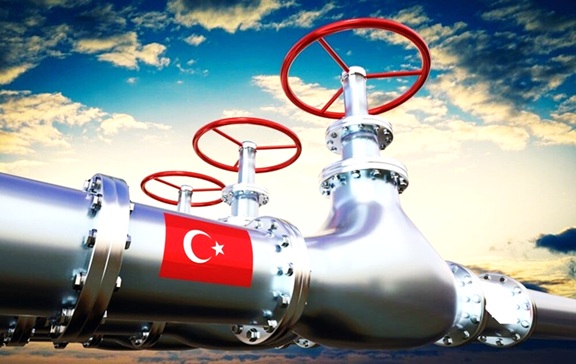
For Türkiye and its neighbourhood, these moves intersect with a broader re-wiring of energy and trade routes. Analysis from Stimson highlights how the reopening of the Kirkuk–Ceyhan pipeline, deepening Gulf–Türkiye energy partnerships and the expansion of the Middle Corridor together build an infrastructure lattice that bypasses chokepoints like Hormuz and the Suez and “empowers regional middle players.” The same geography is being leveraged by new projects such as Ro-Ro services across the Caspian, and by legal/investment reforms in Türkiye’s energy and infrastructure sectors to attract private capital into grids, storage and logistics.
At the same time, a wider South–South investment web is taking shape, with Gulf sovereign funds and corporates deepening exposure not only in Latin America, but also across Asia and Africa – from agribusiness and renewables to ports, logistics, critical minerals and digital infrastructure. Trade and investment between GCC states and partners in Brazil, Mexico, Indonesia, Vietnam, Kenya or Tanzania are increasingly tied to long-term food, fuel and shipping strategies. Latin America is one important new corridor, but it sits alongside parallel Gulf plays in the Indian Ocean, Red Sea and East African coasts, all of which strengthen the Gulf’s position as a global capital and logistics node rather than a pure hydrocarbons supplier.
New corridors – oil pipelines via Iraq–Türkiye, green-power lines across the Caspian, and LNG/renewables deals tied into these routes – diversify supply options for Europe and Asia. That cushions them against shocks at Hormuz, the Suez or Red Sea and strengthens buyers’ leverage in price negotiations. For MENA producers and transit states, this means more competition and more bargaining power if they successfully position themselves as indispensable junctions instead of single-route dependents.
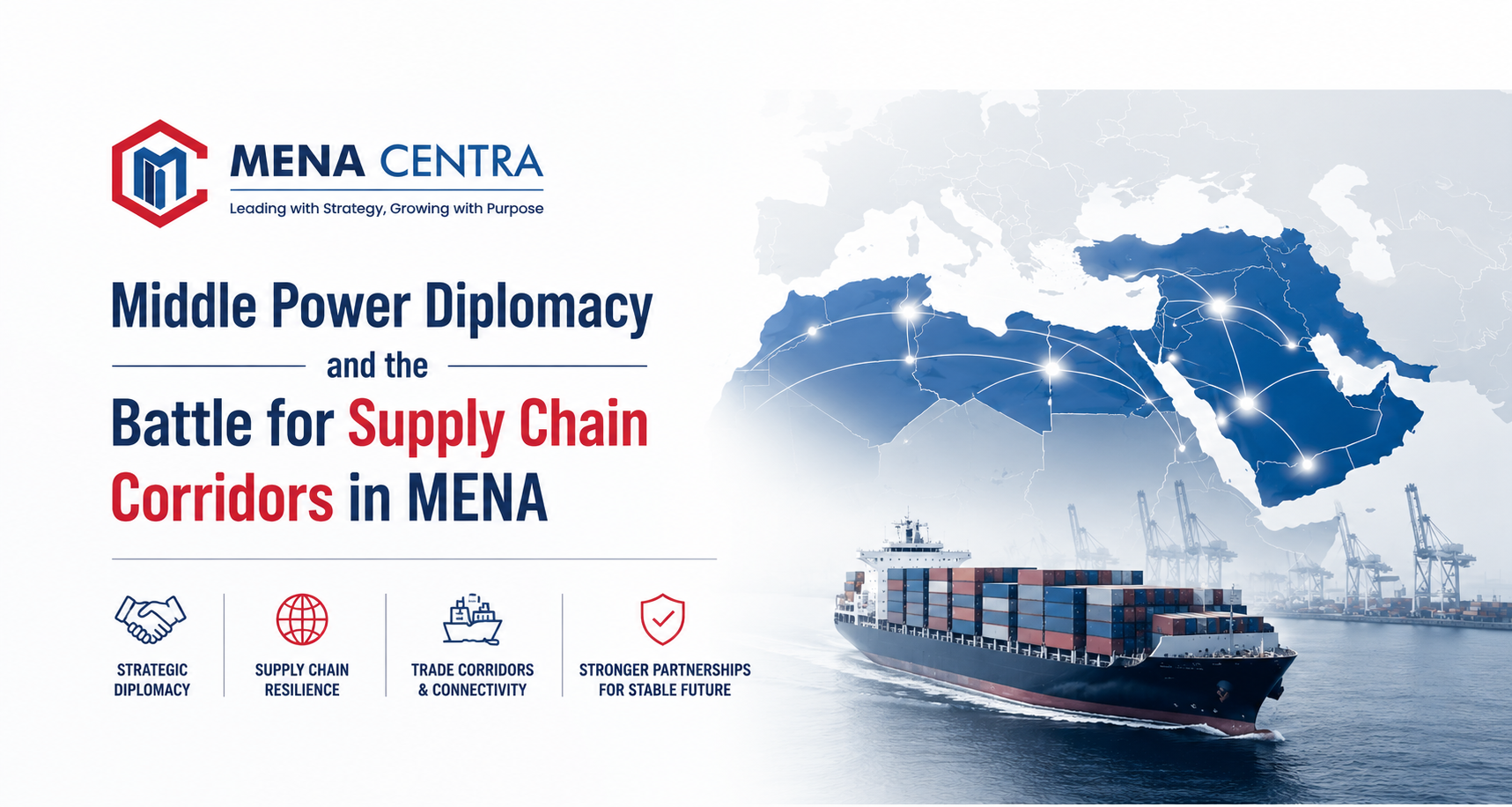
The Middle Corridor/TCTC and ILSTC are rapidly absorbing east–west volumes that once defaulted to Russia or long sea routes. As capacity and customs harmonisation improve, they could shift parts of Asia–Europe trade away from traditional chokepoints and reposition Türkiye, the South Caucasus and Central Asia as core arteries. That, in turn, affects the economics of IMEC-style projects, Gulf ports, and the Iraq–Türkiye “Development Road” concept.
Corridor politics are now proxy arenas for bigger alignments:
– EU’s Global Gateway vs. China’s BRI/ILSTC;
– Gulf capital choosing how to balance Asia, Africa and Latin America;
– Russia and Iran trying not to be fully bypassed by Middle Corridor routes.
Each financing decision – an ADB-backed Green Energy Corridor, a Gulf-funded port in Brazil, or a Ro-Ro line across the Caspian – subtly shifts who has leverage over whom in crises and sanctions episodes.
Corridors are sold as growth engines, but they transmit shocks as easily as they transmit goods. Faster east–west routes can lower import costs for food and fuel, easing pressure on subsidy bills. Yet they can also lock countries into export-oriented models that raise domestic prices (for grain, energy, land near logistics hubs) and intensify centre–periphery inequalities if benefits cluster in a few ports and free zones. Experiences from Canada’s contested “national corridor” debates and Latin America’s infrastructure politics are a reminder: corridor megaprojects without strong social contracts often trigger local backlash and legal disputes, not stability.
Does the EU’s TCTC/Connectivity Investors Forum quickly produce a concrete pipeline of financed projects (rail bottlenecks, customs digitalisation, port upgrades), or does it stall in studies and communiqués? Follow-up from DG NEAR, EIB/KfW and TRACECA in early 2026 will show whether the Middle Corridor is moving from narrative to steel and software.
The feasibility study now being launched will determine capacity, routing and connectivity of the Caspian Green Energy Corridor – including how strongly it plugs into South Caucasus grids and, ultimately, Türkiye and EU demand. Watch for whether MENA/Gulf capital is invited in, and how “green” criteria are enforced in practice.
Ankara’s ability to synchronise the Iraq–Türkiye pipeline restart, the proposed Development Road, and Middle Corridor rail/port upgrades – while keeping ties open with both EU and China – will be a key test of its ambition to be an energy–industrial and logistics hub, not just a transit state. Watch for concrete financing packages and construction tenders rather than just MoUs.
As Gulf sovereign funds deepen exposure across Latin America, Asia and Africa, track where long-term offtake contracts are being signed and which legal protections (BITs, arbitration clauses, local content rules) are used. These will show whether these corridors become stable food-and-fuel backstops for MENA, or new arenas of regulatory and political risk that can boomerang back into Gulf and wider regional economies.
From Russia–Ukraine in the Black Sea to Israel–Syria–Lebanon and chronic insecurity in Iraq – are increasingly shaping trade routes. Watch how: (1) war-risk and cargo insurance premiums or coverage withdrawals quietly reroute shipping in the Red Sea, Eastern Med and Black Sea, (2) cyberattacks on ports, rail and energy systems raise perceived risk along entire corridors, and (3) banks and export credit agencies “de-risk” by tightening security and ESG criteria in high-tension geographies.
Together, insurers and financial institutions are becoming silent gatekeepers of which corridors are viable, and their risk decisions ultimately show up in higher freight costs and prices paid by consumers.