06 December 2025 Admin
Türkiye’s outward push: energy diplomacy from the Eastern Med to Pakistan
16 - 23 November 2025
This week’s developments confirm that Türkiye’s energy story is no longer just about transit. Ankara is moving simultaneously upstream (exploration), industrial (batteries, nuclear supply chain), and diplomatic (regional grid and maritime politics) – with energy policy increasingly fused with trade, security, and industrial strategy.
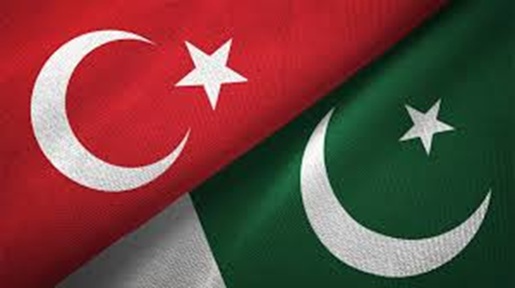
On the eastern flank, Energy Minister Alparslan Bayraktar’s visit to Islamabad produced a concrete upstream axis: Türkiye’s state oil company TPAO signed multiple agreements with Pakistani partners to explore for oil and gas both onshore and offshore, including deep-sea drilling blocks in the Arabian Sea.  For Ankara, this is about expanding its global energy footprint and securing equity barrels; for Pakistan, it is a way to bring in non-Western capital and technology as it struggles with chronic supply deficits. In parallel, Ankara is signalling that while Russia will remain a core gas supplier, it intends to diversify through LNG, Iran, and new upstream plays rather than stay locked into a single vector.
Domestically, Türkiye is quietly hardening its energy security architecture. LNG infrastructure can now cover almost half of national gas demand, supported by five LNG terminals (including FSRUs) and rapidly expanding storage capacity – with a target for underground storage to reach at least 20% of annual consumption by 2028.  On the clean-energy value chain, Turkish firm GO Enerji and South Korea’s LG Energy Solution agreed a €45 million battery-pack plant in Ankara, scaling up to multi-gigawatt output for both the domestic grid and export markets, positioning Türkiye as a regional storage manufacturer rather than just an importer.  At the same time, the UAE signalled it is widening cooperation with Türkiye in solar, wind and hydrogen, leveraging over $50 billion of Emirati global renewables investments to deepen ties with Ankara’s own 2035 green-capacity targets.
A second strategic pillar is nuclear and regional grid connectivity. Ankara and Seoul signed a Memorandum of Understanding between TÜNAŞ and KEPCO to accelerate joint nuclear development, explicitly tied to Türkiye’s second nuclear power plant in Sinop and future projects in Thrace – shifting Türkiye from a single-supplier model with Rosatom at Akkuyu to a diversified, Asian-anchored nuclear partnership.  In Tehran, Iranian officials publicly offered to extend the 10 bcm/year gas export contract to Türkiye and expand electricity cooperation, framing Iran as a “reliable” supplier and calling for the removal of trade and investment barriers between the two countries.  Meanwhile, the EU announced €500 million to strengthen Armenia’s energy security and is “already working” on an Armenia–Türkiye power grid link, embedding Ankara in a broader Caucasus transmission architecture even as it seeks to reduce Russian leverage over regional energy.
Where Ankara’s room for manoeuvre looks tighter is the Eastern Mediterranean. After Lebanon and Cyprus finally signed a long-delayed maritime demarcation agreement that opens the way for offshore gas exploration and deeper energy cooperation with the EU, Türkiye condemned the deal as a unilateral step that ignores Turkish Cypriot rights and undermines its “Blue Homeland” doctrine.  The contrast is sharp: while Türkiye is expanding its influence eastwards into Pakistan, Iran, and the Caucasus – and building industrial capacity at home – it is being increasingly challenged by attempts for new legal and commercial frameworks in parts of the Eastern Med.
Taken together, this week underlines a structural shift. Türkiye is leveraging energy not just to keep molecules flowing, but to anchor new industrial investments, deepen South–South alliances, and insert itself into emerging grid and nuclear networks. The open question for partners in MENA and Europe is whether they treat Ankara primarily as a flexible balancing hub in these overlapping systems – or as a competitor in the design of tomorrow’s energy and connectivity order.