19 October 2026 Admin
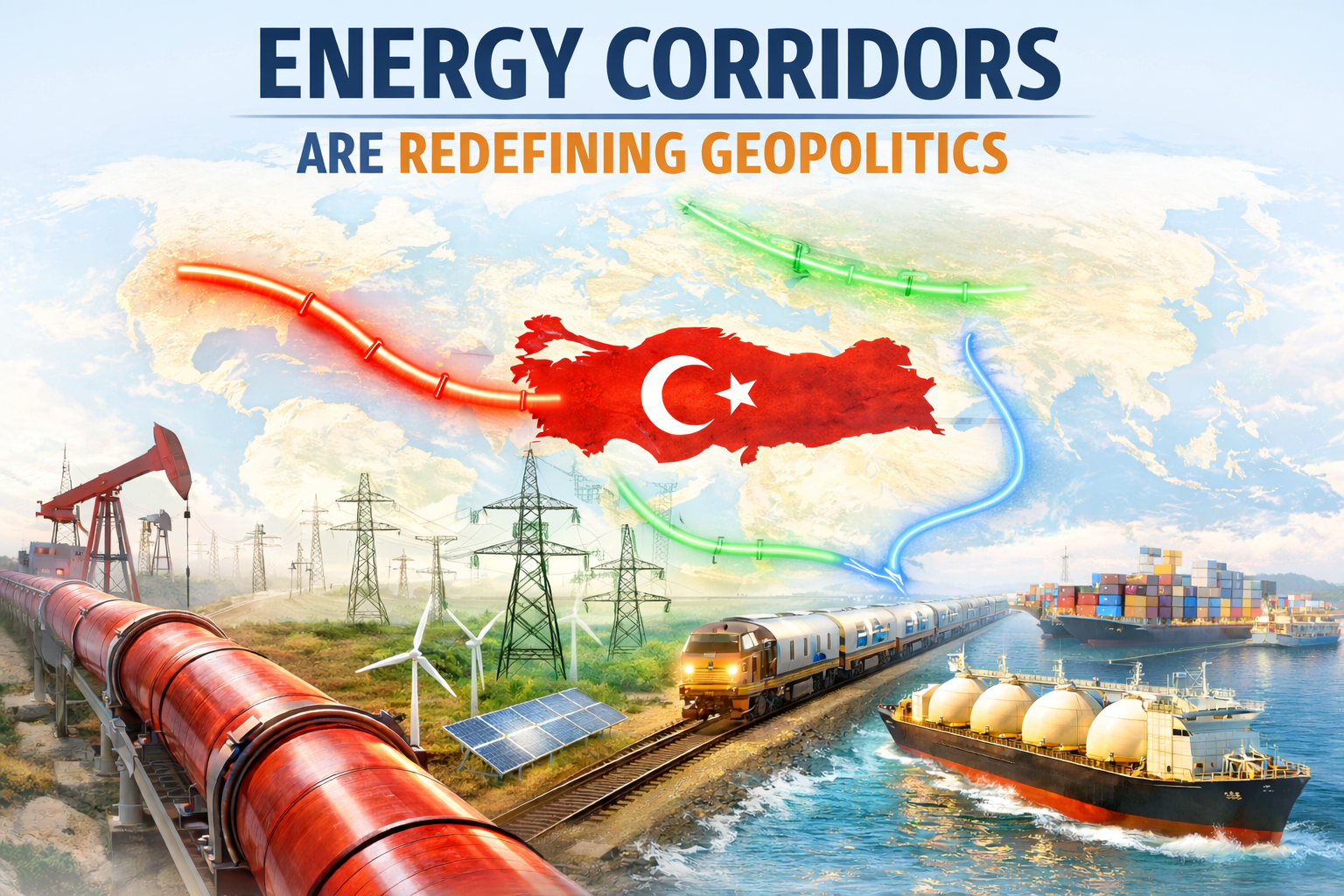
Why does Turkiye matter so much to regional energy corridors? The short answer is access. Gas from the Caspian, oil from the Caucasus and supply from the Middle East all find their most practical path to European buyers through Anatolia. Few other routes offer the same reach, with the Black Sea and the Mediterranean on either side. But the real story has moved beyond fuel.
Pipelines now share space with ports, rail links, storage sites and industrial zones. That makes Energy Corridors in Turkey a much wider subject. They affect where companies build, how they spread supply risk and which trade routes they trust across MENA, Europe and Central Asia. This article looks at what that means for energy security, investment and regional connectivity.
Geography is where the story starts. Turkey is close to:
Experts have a name for this structure: a Geo-Economic Corridor. This infrastructure gives you business value and political influence together. Now, a great location alone isn’t only the charm here. Capacity, political cooperation, investment and long-term demand matter just as much. Plenty of well-placed countries have found that out the hard way.
Instead of listing every pipeline, let's look at what each corridor means in practice.
The Trans-Anatolian Pipeline (TANAP) carries Azerbaijani gas across Turkey and connects to the Trans Adriatic Pipeline which then delivers it to southern Europe. For Europe, the benefit is clear: it doesn't have to lean on just one supplier. For Turkey, it's even bigger, because simply being the transit country starts turning into real influence.
TurkStream carries Russian gas under the Black Sea to Turkey and on to parts of southeastern Europe. Europe's attitude towards Russian energy has changed, so the risks around this route are different from when it started. A route can lose or gain value much faster than its physical pipes change.
The Baku-Tbilisi-Ceyhan pipeline brings oil to the Mediterranean coast at Ceyhan. Iraqi oil flows through Turkey have also been part of regional talks, although they have faced legal and commercial disputes. Ports and tankers then carry the oil much further than the pipeline itself.
LNG terminals, renewable power lines and hydrogen are the next chapter. Most are still at an early stage, but they could become big parts of Turkey's corridor system.
In the past, energy projects and logistics projects were planned separately. That is slowly changing. Energy corridors now overlap with ports and rail networks, highways and industrial zones, storage facilities, and digital systems.
The result is what we can call Supply Chain Corridors. These are connected networks that move energy, raw materials, finished goods and key inputs together. Reliable energy affects where factories are built, how much transport costs and where investors put their money. So even a company that never uses a gas pipeline directly can still depend on it.
How do energy corridors support supply chain resilience? They give industry steady power and fuel. And when they link to ports and rail, they also give backup routes if one link fails.
The chain is simple. Energy infrastructure supports industry. Industry needs logistics. Logistics feeds trade. Trade attracts investment.
When this chain works, Regional Trade Connectivity improves between Europe, MENA, the Caucasus, Central Asia and Mediterranean markets. Firms get more route choices and better market access. Multimodal links make industry more competitive.
Strategic insight: Energy connectivity becomes economically more powerful when it is integrated with transport, logistics, industrial and trade infrastructure.
This is not a sales pitch. Corridors carry real risks, and smart investors count them in.
|
Risk |
Why it matters |
|
Geopolitical tension |
Conflicts and political disputes can change how reliable a route is, sometimes very quickly |
|
Energy transition |
Cleaner energy may reduce the long-term value of oil and gas infrastructure |
|
Chokepoints |
Heavy reliance on narrow routes like straits creates risk for the whole system |
|
Rules and policies |
Cross-border projects need matching laws and investment frameworks |
|
Funding |
Big projects need patient, long-term money from public and private sources |
|
Security |
Both physical sites and digital systems need strong protection |
What are the main risks of investing in regional energy corridors? Political disruption, changing demand and very long payback periods. A pipeline built for thirty years of gas flow may face a very different market after fifteen.
The direction is clear. Corridors are moving away from only carrying oil and gas, towards a mix of energy and logistics. Growth areas include:
Europe's changing energy needs and MENA's big infrastructure plans will shape what gets built next. The winners will be corridors where energy, transport and digital systems work well together, and where being flexible counts for more than carrying huge volumes.
|
Who |
What to think about |
|
Energy companies |
More route options and wider market access |
|
Institutional investors |
Long-term strength of infrastructure and geopolitical risk |
|
Trade strategists |
Efficient corridors and better market links |
|
Policymakers |
Cross-border cooperation and energy security |
|
Infrastructure developers |
Multimodal, future-ready design |
|
International businesses |
Wider supply chain choices and market access |
The main lesson is simple. Look at corridors as regional systems, not single assets. Cross-border cooperation is where this gets practical, and it is exactly where work on strategic partnerships and economic diplomacy can help.
Understanding a corridor is one thing. Acting on it is another. MENA Centra helps governments, investors and businesses turn regional connectivity into practical results. Our Business Innovation work supports trade and industrial cooperation, including flagship efforts such as Smart Trade Corridors. MENA Analytics gives decision makers clear intelligence on political economics, global trade, logistics and regional industrialisation.
Our Strategic Partnerships work brings the right public and private players together across Türkiye, the Gulf, North Africa and Europe. Whether you are mapping a new route or entering a new market, we help you plan with clarity. The aim is simple. Move from analysis to action, with partners who understand both the policy and the market.
Turkey matters for more than just moving energy from place A to place B. Its position links energy security with logistics, investment and trade. That is why Energy Corridors in Turkey sit at the centre of the bigger picture of Supply Chain Corridors and Regional Trade Connectivity.
In the years ahead, the most valuable corridors will be the ones that can adapt to new energy systems, changing politics and new trade needs.
They are connected networks of energy, transport, logistics and digital systems that move both energy and goods. The idea is to treat them as one system, not as separate projects.
By building more multimodal infrastructure, working closely with neighbouring countries and joining its corridors with nearby markets. Matching rules and investment frameworks matter as much as new construction.
Political tension, mismatched regulations, falling demand for fossil fuels and security threats to physical and digital assets. Relying on narrow chokepoints adds to the risk.
That is too strong a claim. It is more accurate to say Turkey is a growing centre for transit, connectivity and supply diversification, with real strengths and real limits.
Most likely, yes, but slowly. Renewable power lines, storage and hydrogen could sit alongside the existing oil and gas network, though timing depends on demand, funding and government policy.